
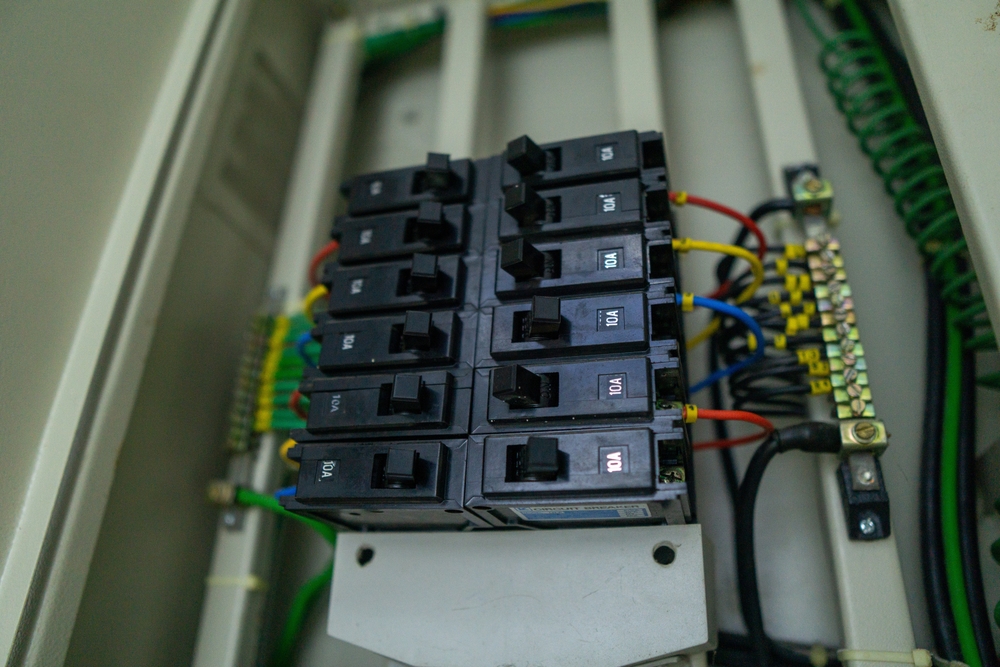
Circuit breakers protect electrical equipment and personnel from overloads, short circuits, and other electrical faults. However, as electrical systems age, the breakers protecting them may become obsolete, making maintenance and replacement increasingly difficult.
An obsolete circuit breaker can create challenges for facility managers, maintenance teams, and electrical contractors. Replacement parts may be harder to source, manufacturer support may be limited, and newer breakers may not be compatible with existing equipment.
Understanding how to identify an obsolete circuit breaker and evaluate replacement options can help facilities maintain electrical safety while avoiding unnecessary upgrades.
In this article, we’ll cover:
- How to determine whether a circuit breaker is obsolete
- Warning signs that an aging breaker needs attention
- Specifications needed to identify a compatible replacement
- Replacement options for discontinued circuit breakers
- When to consider upgrading existing electrical equipment
What Is an Obsolete Circuit Breaker?
An obsolete circuit breaker is a breaker that is no longer manufactured or actively supported by its original manufacturer. Although it may still function properly, replacement units and components can become difficult to obtain.
Breakers may become obsolete due to product discontinuation, manufacturer acquisitions, changing standards, or advancements in circuit protection technology.
Obsolescence does not automatically mean a circuit breaker is unsafe or requires immediate replacement. Many older breakers remain operational for decades when properly maintained. However, limited parts availability and technical support can complicate future maintenance and increase downtime if a breaker fails.
How to Tell if a Circuit Breaker Is Obsolete
Identifying an obsolete circuit breaker begins with examining the equipment and reviewing available manufacturer information.
1. Check the Manufacturer and Model Number
Locate the manufacturer’s name, model number, catalog number, and other identifying information on the breaker’s nameplate or housing.
Common manufacturers of older circuit breakers include:
- General Electric (GE)
- Westinghouse
- Federal Pacific Electric (FPE)
- ITE
- Square D
- Siemens
- Cutler-Hammer
Some of these manufacturers’ product lines have changed ownership or been discontinued. Once you identify the breaker, consult manufacturer documentation or an electrical equipment supplier to determine whether it remains in production.
2. Look for Discontinued Product Information
Manufacturers may publish discontinuation notices, replacement guides, or technical bulletins identifying unsupported equipment.
If a breaker no longer appears in current product catalogs, it may be obsolete. A qualified supplier can confirm its production status and identify potential replacement options.
3. Evaluate Replacement Parts Availability
Difficulty finding replacement breakers, trip units, or operating mechanisms may also indicate obsolescence.
Even when complete breakers are available through secondary markets, individual components may be scarce. Understanding parts availability before equipment fails can help facilities plan maintenance and minimize downtime.
Signs an Aging Circuit Breaker May Need Replacement
While obsolescence alone does not require replacement, certain operating conditions warrant professional evaluation.
Common warning signs include:
- Frequent tripping: Repeated trips may indicate electrical faults, coordination issues, or breaker deterioration.
- Physical damage: Cracks, corrosion, discoloration, or overheating can indicate compromised equipment.
- Operating difficulties: Stiff mechanisms, inconsistent operation, or failure to reset may suggest mechanical problems.
- Failed testing: Results outside manufacturer specifications can indicate unreliable performance.
- Limited serviceability: Unavailable parts or technical support may make continued maintenance impractical.
Qualified electrical personnel should evaluate these conditions before determining whether a breaker can remain in service.
What Information Is Needed to Find a Replacement Circuit Breaker?
Finding a suitable replacement requires more than matching the physical dimensions or amperage rating of the original breaker. Several specifications must be verified.
Manufacturer, Model, and Catalog Number
The original catalog number helps suppliers identify the breaker configuration and determine whether an exact or manufacturer-approved replacement exists.
Voltage and Current Ratings
Replacement breakers must have appropriate voltage and continuous current ratings for the electrical system.
Interrupting Capacity
Interrupting capacity identifies the maximum fault current a breaker can safely interrupt under specified conditions. A replacement must have an adequate interrupting rating for the available fault current at its installation location.
Number of Poles and Mounting Configuration
Breakers vary in their pole counts, mounting arrangements, dimensions, and connections. Similar electrical ratings do not guarantee mechanical compatibility.
Trip Characteristics and Protection Features
Trip settings, time-current characteristics, and protection features must also be considered. Changes can affect equipment protection and coordination throughout the electrical system.
Replacement breakers must be verified for electrical and mechanical compatibility, including applicable equipment listings and manufacturer instructions.
What Are the Options for Replacing an Obsolete Circuit Breaker?
When the original breaker is discontinued, several replacement approaches may be available.
1. Find a Direct Replacement
The simplest solution is an exact replacement matching the original specifications.
Although discontinued breakers may be unavailable from manufacturers, unused surplus inventory may still exist through specialized electrical equipment suppliers. The replacement’s condition and suitability must still be verified.
2. Consider Reconditioned Circuit Breakers
Reconditioned circuit breakers may provide an alternative when new replacements are unavailable.
Qualified specialists can inspect, service, and test eligible breakers to establish their condition and performance.
However, not every breaker can be reconditioned. Applicable electrical codes, manufacturer instructions, and industry standards must be followed. Certain molded-case circuit breakers, for example, cannot be reconditioned under applicable code requirements.
3. Explore Retrofit Solutions
Some existing electrical equipment can accommodate newer breakers through engineered retrofit solutions.
These approaches may allow facilities to retain portions of their electrical infrastructure while upgrading circuit protection.
However, compatibility must be verified through appropriate engineering evaluations and applicable approval requirements. A physically fitting breaker is not necessarily an approved replacement.
4. Replace or Upgrade Electrical Equipment
When compatible breakers are unavailable or existing equipment has significant limitations, a larger upgrade may be appropriate.
This could involve replacing a panelboard, switchboard, switchgear assembly, or other distribution equipment.
Although more expensive initially, modernization may improve parts availability, maintenance accessibility, and long-term reliability.
Should You Replace an Obsolete Breaker or Upgrade the Entire System?
The decision depends on equipment condition, replacement availability, operating requirements, and long-term facility plans.
Individual breaker replacement may be appropriate when the surrounding equipment remains in good condition and a compatible replacement is available.
A broader upgrade may make more sense when:
- Multiple breakers or components are obsolete
- Replacement parts are increasingly difficult to find
- Existing equipment experiences recurring reliability issues
- Electrical capacity or protection requirements have changed
- Planned facility improvements justify modernization
Facilities should also consider downtime costs. Maintaining aging equipment without a reliable replacement strategy can create unnecessary operational risks.
An experienced electrical equipment supplier can help assess available options before committing to a full system replacement.
Find Replacement Circuit Breakers With United Industries
Obsolete circuit breakers are a common challenge for facilities operating aging electrical infrastructure. Identifying the original breaker, verifying its specifications, and understanding replacement options are essential to maintaining safe, reliable electrical distribution.
At United Industries, we understand the challenges of sourcing electrical equipment for existing systems. Our team can help customers identify difficult-to-find circuit breakers and explore replacement options suited to their equipment requirements.
Whether you’re searching for a discontinued breaker or evaluating options for an aging electrical distribution system, contact United Industries to discuss your equipment needs and available solutions.
Author Profile

Latest entries
 Electrical EquipmentOctober 21, 2026How to Identify an Obsolete Circuit Breaker and Find a Replacement
 Electrical EquipmentOctober 21, 2026What Is a Motor Control Center (MCC)? Components, Applications, & Replacement
 Electrical EquipmentOctober 21, 2026Switchgear vs. Switchboard: What’s the Difference?