
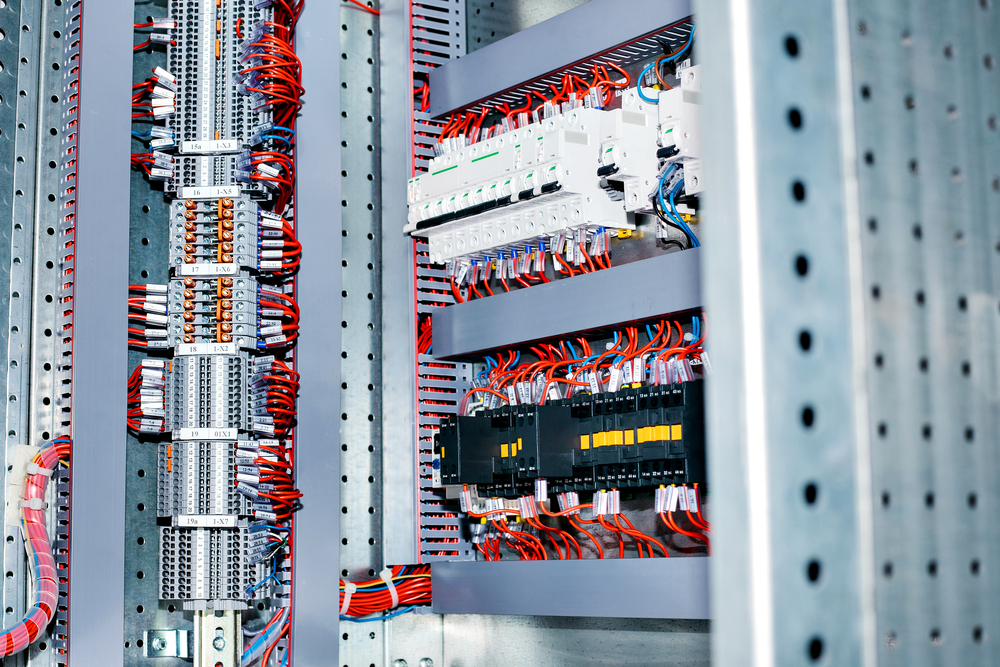
When you’re replacing aging electrical equipment or planning a facility upgrade, switchgear and switchboards may appear to serve the same purpose. Both distribute power and incorporate protective devices, but their construction and operating capabilities can lead to different maintenance requirements and purchasing decisions.
The main difference is that low-voltage power circuit breaker switchgear emphasizes compartmentalization, serviceable breakers, and short-time fault withstand capability. Switchboards typically offer a more compact distribution arrangement. Both can serve low-voltage systems, so voltage alone does not determine which equipment you need.
This guide focuses on U.S. low-voltage equipment and explains:
- What switchgear and switchboards do.
- Key differences in construction, protection, and maintenance.
- How to evaluate the right fit for your facility.
- What to verify before buying used or surplus equipment.
What is switchgear?
Switchgear is a broad term for equipment that controls, protects, and isolates electrical circuits. For this comparison, we’re focusing on metal-enclosed low-voltage power circuit breaker switchgear, covered by UL 1558.
This equipment uses individually compartmentalized power circuit breakers, with barriers separating breakers from one another and from the main bus compartment. The busbars are conductors that carry power through the assembly.
Many designs use drawout breakers, which can be disconnected and withdrawn for inspection, maintenance, or replacement. Their serviceable construction can be valuable where maintaining power distribution equipment is an ongoing operational priority.
These features help explain why switchgear is often considered for industrial facilities and other applications with critical loads. Arc-resistant construction is an additional option, however, so verify that feature when the project requires it rather than assuming every assembly includes it.
What is a switchboard?
An electrical switchboard receives incoming power and distributes it to downstream circuits or equipment. Busbars carry electricity to protective devices, which may include molded-case circuit breakers, insulated-case breakers, or fusible switches.
Switchboards are covered by UL 891. They are commonly used for commercial and industrial distribution, including service-entrance applications where utility power enters a facility.
Many switchboards provide front access and group multiple protective devices within a section. This arrangement can make efficient use of electrical-room space. Depending on the design, a switchboard may also incorporate metering and surge protection.
A switchboard remains a protective distribution assembly, rather than simply a cabinet that routes power.
Switchgear vs. switchboard: Key differences at a glance
The following comparison describes typical configurations. Always confirm the specifications of the actual equipment under consideration.
| Feature | Low-Voltage Switchgear | Switchboard |
| Primary standard | UL 1558 | UL 891 |
| Internal construction | Individually compartmentalized breakers with separation from the main bus | Typically fewer internal barriers |
| Protective devices | Power circuit breakers | Commonly molded-case breakers, insulated-case breakers, or fusible switches |
| Breaker servicing | Typically drawout, serviceable breakers | Often fixed-mounted breakers; some drawout designs are available |
| Fault performance | Short-time withstand capability supports intentional protective-device delays | UL 891 does not cover assemblies with short-time current ratings |
| Space and access | Often larger, with front and rear access; front-access designs also exist | Often compact and front-accessible |
| Initial cost | Generally higher for comparable distribution requirements | Often lower, depending on configuration |
Drawout construction does not automatically identify an assembly as switchgear. Some switchboards offer drawout breakers, so check the equipment standard and nameplate instead of relying on appearance.
One important distinction is short-time withstand capability: the ability to carry a specified fault current for a defined brief interval. This supports selective coordination, which arranges protection so the device immediately upstream of a fault clears it while other upstream devices remain closed.
For example, a fault on one production circuit should ideally be isolated without disconnecting unrelated circuits. Switchgear’s short-time capability can support that objective, but coordination must be established through proper system design. Switchboards can also be selectively coordinated with suitable protective-device combinations.
A high short-circuit rating alone does not establish the same short-time performance. Compare the documented ratings, rather than assuming similarly rated equipment behaves identically.
Which option fits your facility?
When a switchboard may be the right fit
A switchboard may suit a project where compact distribution and upfront cost are priorities, provided it meets the electrical design requirements.
For example, a commercial property distributing power to lighting, HVAC equipment, and tenant spaces may benefit from a front-access arrangement. Review the required protective devices and available working space before choosing a configuration.
When switchgear may justify the investment
Switchgear may warrant closer consideration where equipment serviceability and continuity of operations carry greater weight. A manufacturing facility with costly process interruptions, for example, may prioritize serviceable breakers and protection designed around critical loads.
Consider purchasing costs alongside the practical consequences of maintenance and replacement. Ask how the equipment will be serviced, what outages would be required, and whether suitable replacement components are available.
Also discuss planned expansion. The best fit for today’s loads may not provide the circuit capacity or layout flexibility required for future projects. Make those requirements part of your sourcing request.
The two categories can also work together. A facility may use switchgear for primary low-voltage distribution and switchboards farther downstream. Have the project’s electrical professional evaluate the complete system rather than selecting equipment by building type alone.
What to verify when buying used or surplus equipment
Once the equipment category is established, focus on the specific assembly. Start your sourcing inquiry with the project specifications and clear equipment identification.
Before committing to a purchase, review:
- Identification and configuration: Manufacturer, model, nameplate information, available drawings, and breaker types.
- Electrical ratings: Voltage, amperage, assembly short-circuit rating, protective-device interrupting ratings, and any required short-time ratings.
- Physical compatibility: Overall dimensions, cable-entry locations, connection arrangements, enclosure suitability, and maintenance access.
- Condition and documentation: Inspection and test reports, known service history, modifications, and applicable certification or field-evaluation records.
Matching voltage and amperage is not enough. The equipment and protective devices must also be suitable for the available fault current at the installation location.
Ask the supplier to clarify what “used,” “surplus,” or “reconditioned” means for the particular item. Those descriptions should not substitute for documented conditions and work performed.
Reconditioned or modified equipment deserves particular attention. UL explains that an original certification mark does not establish that equipment still meets applicable requirements after modification or reconditioning.
Have a qualified electrical professional review compatibility and applicable approval requirements before installation. Testing records are useful, but they do not replace project-specific evaluation.
Find the right equipment for your next project
Understanding the difference between switchgear and switchboards gives you a stronger starting point for an equipment purchase. The next step is confirming that an available assembly meets your project’s electrical and physical requirements.
At United Industries, we help contractors and businesses source new, used, and surplus electrical equipment, including switchgear and distribution components.
Contact our team with your specifications, equipment nameplate photos, and project needs to discuss availability and sourcing options. Whether you’re replacing an existing assembly or preparing for an upgrade, start with the details that will help identify suitable equipment.
Author Profile

Latest entries
 Electrical EquipmentOctober 21, 2026How to Identify an Obsolete Circuit Breaker and Find a Replacement
 Electrical EquipmentOctober 21, 2026What Is a Motor Control Center (MCC)? Components, Applications, & Replacement
 Electrical EquipmentOctober 21, 2026Switchgear vs. Switchboard: What’s the Difference?