
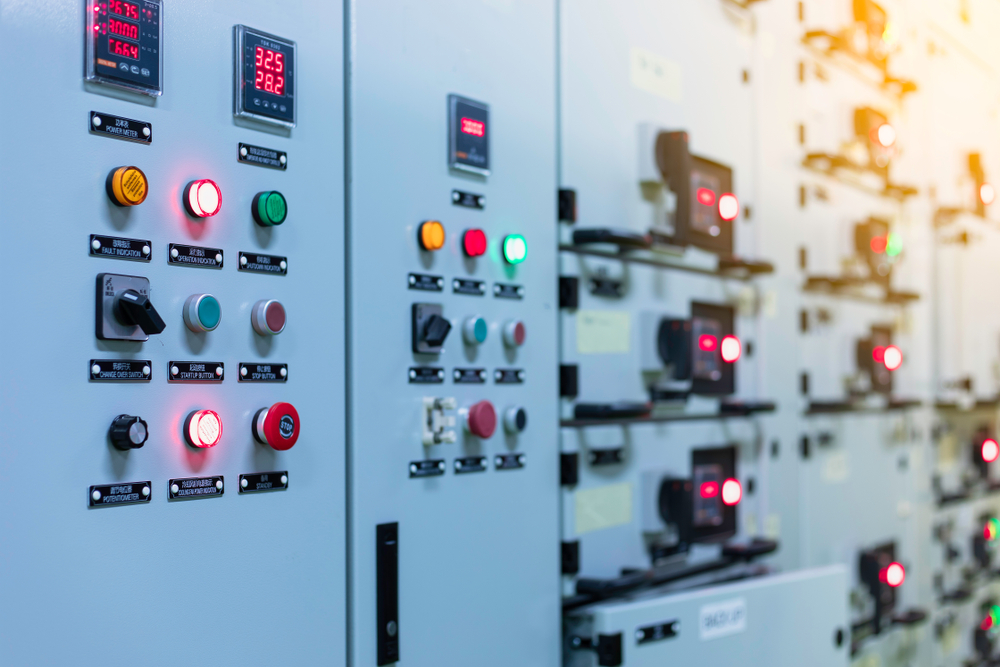
Electric motors power countless processes throughout industrial and commercial facilities, from pumps and conveyors to HVAC equipment and manufacturing machinery. When a facility operates multiple motors, controlling and protecting each one individually can quickly become complicated. A motor control center, commonly called an MCC, provides a centralized way to organize these functions.
Motor control centers bring motor starters, protection devices, controls, and related equipment together within a single enclosed assembly. This helps facilities manage multiple loads while simplifying access for maintenance, troubleshooting, and future system changes.
In this guide, we’ll cover:
- What a motor control center is and how it works
- The primary components found inside an MCC
- Common applications for motor control centers
- How MCCs differ from switchgear and switchboards
- When aging or obsolete MCC equipment may need replacement
- What to consider when sourcing replacement MCC equipment
What Is a Motor Control Center?
A motor control center is an enclosed electrical assembly designed to distribute power to and control multiple electric motors or other electrical loads from a centralized location.
A typical MCC consists of one or more vertical sections connected to a common horizontal power bus. Within those sections are individual motor control units, often referred to as “buckets.” Each bucket contains the components needed to control and protect a particular motor or load.
This modular construction is one of the MCC’s biggest advantages. Instead of installing separate motor control equipment throughout a facility, many controls can be grouped together in an organized lineup.
Depending on the system, MCCs may also incorporate variable frequency drives, monitoring equipment, communications devices, and other controls.
What Are the Main Components of a Motor Control Center?
Although MCC configurations vary considerably by manufacturer and application, several components are commonly found within them.
Bus System
The horizontal bus carries electrical power across the MCC lineup, while vertical buses distribute that power to individual control units within each section.
The ratings and configuration of the bus system must match the electrical requirements of the facility and the equipment being served.
Motor Starters
Motor starters control the starting and stopping of electric motors. A typical starter can include a contactor and overload protection designed to control power to the motor while protecting against conditions that could damage the equipment.
Different applications may use full-voltage starters, soft starters, reversing starters, or other configurations.
Circuit Breakers and Fuses
Circuit breakers, fusible switches, and fuses provide protection against short circuits and other overcurrent conditions.
These protective devices are selected according to factors such as system voltage, available fault current, motor size, and the requirements of the equipment being served.
Variable Frequency Drives
Variable frequency drives, or VFDs, may be installed within MCCs when an application requires greater control over motor speed and operation.
Rather than simply starting or stopping a motor at full speed, a VFD can regulate motor speed based on process requirements. Modern MCCs may combine starters, VFDs, soft starters, feeder devices, and other controls within the same lineup.
Control and Monitoring Equipment
MCCs can also contain relays, meters, pushbuttons, selector switches, communications equipment, and other monitoring or automation components.
Newer intelligent MCCs can integrate communications and smart devices that allow facilities to monitor equipment performance and operating conditions remotely.
Where Are Motor Control Centers Used?
MCCs are most useful in environments where numerous electric motors need to be controlled from a centralized location.
They are commonly found in manufacturing plants, water and wastewater facilities, processing operations, pumping systems, material handling installations, HVAC systems, and other industrial environments. Schneider Electric, for example, identifies applications ranging from wastewater treatment to oil and gas operations.
Within these facilities, an MCC might control conveyor motors, pumps, fans, compressors, mixers, or other process equipment.
The exact configuration depends on the facility’s electrical system, operating environment, motor loads, control requirements, and plans for future expansion.
MCC vs. Switchgear and Switchboards: What’s the Difference?
Motor control centers, switchgear, and switchboards may all be part of the same facility electrical system, but they perform different primary functions.
An MCC is primarily designed to control and protect motors and related loads. Switchboards and switchgear are more focused on distributing electrical power throughout a facility and protecting electrical circuits and equipment.
In many systems, switchgear or a switchboard supplies power downstream to an MCC, which then distributes that power to individual motors and loads.
For a closer look at these other types of electrical distribution equipment, read our guide to Switchgear vs. Switchboard: What’s the Difference?
When Should You Consider Replacing an MCC?
Motor control centers can remain in service for many years, so age alone does not necessarily mean an MCC must be replaced. The condition of the equipment, availability of compatible parts, system requirements, and maintenance history are often more important considerations.
Replacement or modernization may be worth evaluating when:
- Original components have become obsolete or difficult to source
- Replacement buckets, breakers, starters, or other parts are no longer readily available
- The equipment requires increasingly frequent maintenance
- Failures are beginning to affect production or facility uptime
- Electrical loads or operating requirements have changed
- A facility is expanding or modernizing its electrical system
- New controls, VFDs, or monitoring capabilities need to be incorporated
Importantly, replacing the entire MCC is not always necessary. Depending on its condition and design, a facility may be able to replace individual buckets, starters, breakers, or other components while continuing to use the existing structure.
Manufacturers also offer aftermarket MCC solutions specifically designed to extend the useful life of existing equipment in certain applications.
Any decision to modify or replace MCC equipment should be evaluated by qualified electrical professionals who understand the existing system and applicable electrical and safety requirements.
What to Consider When Sourcing Replacement MCC Equipment
Finding a replacement component for an MCC involves more than matching its general appearance. Compatibility with the existing equipment is critical.
Useful information to gather can include:
- MCC manufacturer and product line
- Model or series information
- System voltage
- Current and horsepower ratings
- Starter or bucket size
- Breaker or fuse specifications
- Existing control configuration
- Equipment dimensions and connection requirements
This information becomes particularly important when working with older or discontinued MCCs. A current-production replacement may not always be available, making compatible used, surplus, or obsolete equipment valuable for keeping an existing system operational.
United Industries supplies new, used, surplus, and obsolete electrical equipment, including motor control centers, circuit breakers, switchgear, transformers, and related components.
Finding the Right MCC Solution
Motor control centers provide an organized way to control, protect, and manage the motors that keep industrial and commercial operations running. Understanding the components inside an MCC and how they interact can also make it easier to plan maintenance, system upgrades, and replacement projects.
When equipment becomes damaged, obsolete, or difficult to source, replacing an entire lineup may not always be the only option. Identifying compatible replacement MCCs, buckets, starters, breakers, and related electrical equipment can help facilities maintain existing systems while managing downtime and project costs.
United Industries supplies motor control centers and other new, used, and surplus electrical equipment for commercial and industrial applications nationwide. If you are looking for an MCC or a hard-to-find replacement component, contact United Industries to discuss equipment availability and your system requirements.
Author Profile

Latest entries
 Electrical EquipmentOctober 21, 2026How to Identify an Obsolete Circuit Breaker and Find a Replacement
 Electrical EquipmentOctober 21, 2026What Is a Motor Control Center (MCC)? Components, Applications, & Replacement
 Electrical EquipmentOctober 21, 2026Switchgear vs. Switchboard: What’s the Difference?