
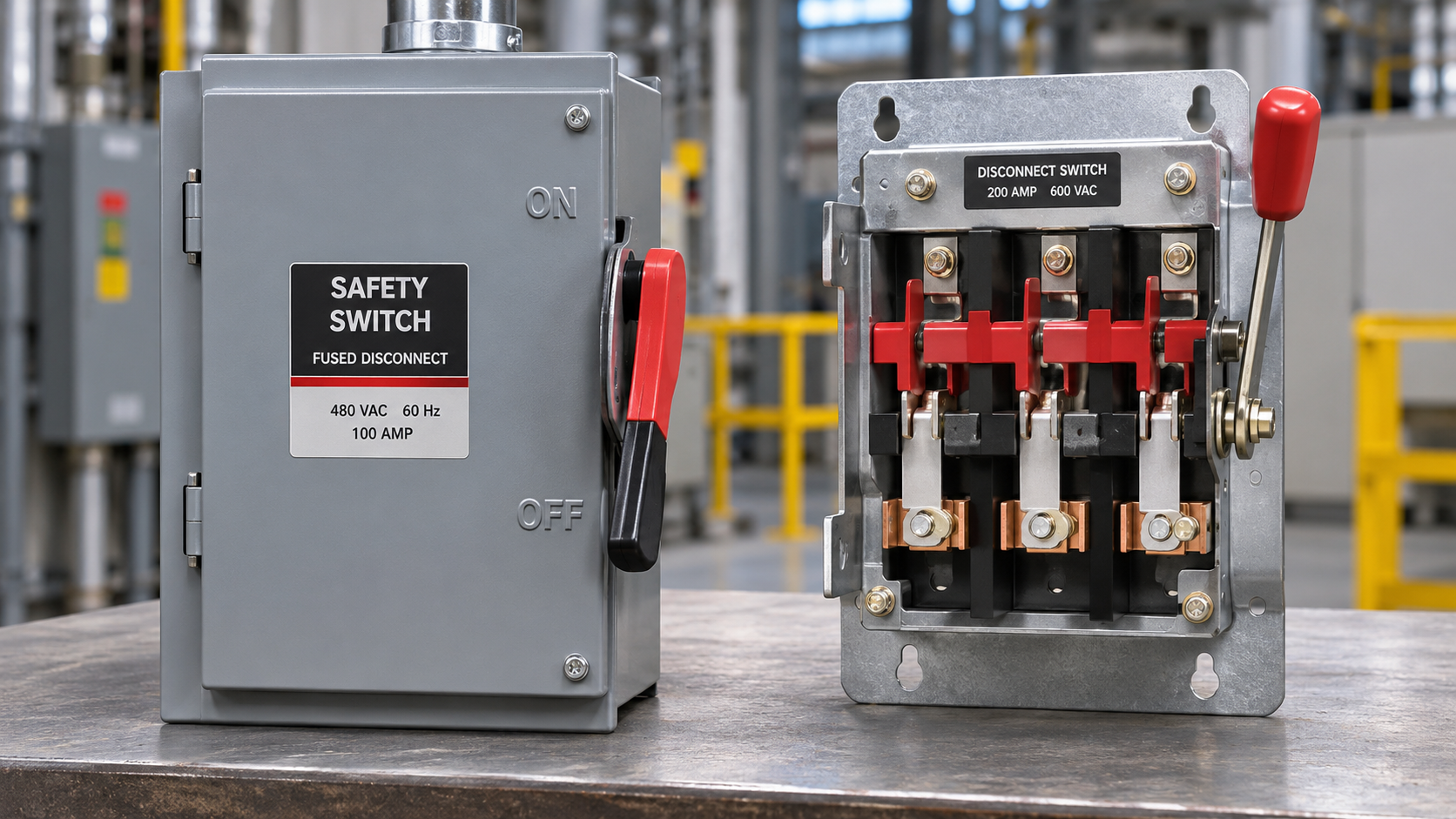
When working with industrial electrical equipment, understanding the differences between various switching devices is essential for maintaining safe and reliable operations. Two terms that are often used interchangeably are safety switch and disconnect switch. Although these devices serve similar purposes, their features, applications, and capabilities can vary.
Both are designed to disconnect electrical power from equipment or circuits, but not every disconnect switch provides the same level of functionality or protection. Knowing what distinguishes these devices can help facility managers, electricians, and maintenance professionals select the appropriate equipment for their applications.
In this article, we’ll cover:
- What a disconnect switch is and how it isolates electrical equipment from its power source.
- What makes a safety switch different, including common safety features and enclosure designs.
- Fused vs. non-fused switches and how they affect electrical protection.
- Common industrial applications for safety switches and disconnect switches.
- Important selection considerations when purchasing or replacing electrical disconnect equipment.
What Is a Disconnect Switch?
A disconnect switch is an electrical device used to isolate a circuit or piece of equipment from its power supply. Its primary purpose is to provide a means of disconnecting electrical power so equipment can be inspected, serviced, or maintained.
Disconnect switches are commonly installed in industrial facilities, commercial buildings, and electrical distribution systems. They may be used with motors, machinery, HVAC equipment, transformers, and other electrical components.
Depending on their design, disconnect switches may be manually operated or electrically operated. They are available in several configurations, including enclosed switches, open-style switches installed within electrical assemblies, and switches integrated into other equipment.
A disconnect switch’s ability to interrupt current depends on its ratings and intended use. Some are designed to open and close circuits under normal load conditions, while others are intended only for isolation after the load has been removed.
It’s also important to understand that a disconnect switch does not necessarily provide overcurrent protection. Unless it incorporates appropriate protective components, such as fuses, its primary function is electrical disconnection rather than protection against overloads or short circuits.
What Is a Safety Switch?
A safety switch is a type of disconnect switch commonly used to provide a dedicated, manually operated means of disconnecting electrical power from equipment.
In industrial and commercial electrical systems, the term typically refers to an enclosed disconnecting device with features designed to support safe operation and maintenance.
Common safety switch features include:
- External operating handles: Allow personnel to operate the switch without opening the enclosure.
- Lockable operating mechanisms: Support lockout/tagout procedures by allowing the switch to be secured in the OFF position.
- Protective enclosures: Help protect internal components from accidental contact and environmental conditions.
- Visible blade designs: Some models allow qualified personnel to verify the position of the switch contacts when the enclosure is safely opened.
- Fused or non-fused configurations: Provide options for applications requiring additional circuit protection.
Safety switches are frequently installed near industrial machinery, motors, HVAC systems, and other equipment requiring a local disconnecting means.
However, the name safety switch does not mean the device automatically makes equipment safe to service. Proper isolation, lockout/tagout procedures, and verification of the absence of voltage are still necessary before electrical work begins.
Safety Switch vs. Disconnect Switch: Key Differences
The primary distinction between a safety switch and a disconnect switch involves terminology, construction, and intended application.
A safety switch is generally a specific category of disconnect switch, while the broader term disconnect switch encompasses many different devices used to isolate electrical circuits.
| Feature | Safety Switch | Disconnect Switch |
| Primary purpose | Disconnect electrical power | Disconnect electrical power |
| Typical construction | Enclosed, manually operated device | Enclosed, open-style, or integrated device |
| Operating mechanism | Commonly uses an external handle | Varies by design |
| Lockout capability | Commonly provided | Depends on the model |
| Overcurrent protection | Available in fused models | Depends on the device |
| Common applications | Equipment isolation, motors, HVAC, industrial machinery | Equipment isolation and electrical distribution systems |
Although these distinctions are useful, they are not absolute. Many disconnect switches offer the same features associated with safety switches.
For this reason, equipment should be evaluated based on its specifications, ratings, certifications, and intended application rather than its name alone.
Fused vs. Non-Fused Safety Switches
One of the most important considerations when comparing safety switches and disconnect switches is whether the device is fused or non-fused.
Fused Safety Switches
A fused safety switch combines a disconnecting mechanism with fuses that provide overcurrent protection when properly selected and coordinated.
The fuses can interrupt excessive current resulting from certain overload or short-circuit conditions, helping protect downstream equipment and electrical circuits.
Fused safety switches are commonly used where a local disconnect and additional overcurrent protection are required.
When selecting a fused switch, buyers should consider the fuse class, voltage, amperage, and applicable short-circuit current rating (SCCR).
Non-Fused Safety Switches
A non-fused safety switch provides a means of disconnecting electrical power without incorporating fuses.
These switches are often used when the necessary overcurrent protection is already provided by an upstream circuit breaker or another protective device.
Non-fused switches can be appropriate for equipment isolation, but they should not be mistaken for overcurrent protective devices.
The choice between fused and non-fused equipment depends on the electrical system design, applicable codes, equipment requirements, and the location of existing protective devices.
Where Are Safety Switches and Disconnect Switches Used?
Both types of equipment play important roles in commercial and industrial electrical systems.
Industrial motors and machinery: Disconnect switches provide a means of isolating motors, conveyors, pumps, and production equipment for maintenance. Enclosed safety switches are frequently used as local disconnecting devices.
HVAC equipment: Commercial air conditioning units, rooftop equipment, and other HVAC systems commonly require accessible disconnecting means. Fused or non-fused switches may be used depending on equipment specifications and electrical requirements.
Electrical distribution systems: Disconnect switches can be incorporated into switchgear, switchboards, and other distribution equipment to isolate circuits or sections of an electrical system.
Manufacturing facilities: Industrial environments often require disconnecting devices that can withstand frequent operation and challenging environmental conditions.
Outdoor installations: Enclosed safety switches with appropriate environmental ratings can be used in locations exposed to moisture, dust, or other outdoor conditions.
Regardless of the application, the disconnecting device must be properly rated and suitable for the electrical system in which it is installed.
How to Choose the Right Safety Switch or Disconnect Switch
When purchasing new or replacement electrical equipment, several factors should be evaluated to ensure compatibility with the existing installation.
1. Voltage and Amperage Ratings
The switch must be rated for the system voltage and the current it will carry. Selecting a device with insufficient ratings can create serious safety and reliability concerns.
2. Load Type and Switching Requirements
Not all disconnect switches are designed to interrupt current under load. Applications involving motors or other demanding loads may require specific horsepower ratings or load-break capabilities.
3. Fused or Non-Fused Configuration
Determine whether the installation requires a fused disconnect or whether appropriate overcurrent protection is already provided elsewhere in the system.
4. Enclosure Type
The installation environment influences the appropriate enclosure selection. Indoor, outdoor, wet, dusty, and corrosive environments may require different NEMA enclosure ratings.
5. Manufacturer and Equipment Compatibility
When replacing an existing switch, review the manufacturer’s specifications, catalog number, mounting requirements, and electrical ratings.
A replacement should not be selected based solely on its physical appearance or amperage rating. Its listing, intended use, and compatibility with the application must also be verified.
6. Applicable Codes and Safety Requirements
Electrical installations must comply with applicable codes and workplace safety requirements. Depending on the application, considerations may include the National Electrical Code (NEC), OSHA requirements, and relevant equipment standards.
A qualified electrical professional should verify that the selected device meets the installation’s requirements.
Finding the Right Industrial Electrical Disconnect Equipment
Understanding the difference between a safety switch and a disconnect switch starts with recognizing that both serve the essential purpose of electrical isolation. Safety switches are commonly enclosed, manually operated disconnecting devices, while the broader disconnect switch category includes a wider range of designs and applications.
The right choice depends on the electrical system, load requirements, available overcurrent protection, and operating environment.
Whether you’re replacing an aging disconnect, maintaining industrial machinery, or sourcing electrical equipment for an existing facility, identifying the correct specifications is an important first step.
United Industries helps businesses source industrial electrical equipment, including components for maintaining, replacing, and upgrading existing electrical systems. Our team can help you explore available equipment options based on your operational needs.
Contact United Industries to discuss your electrical equipment requirements.
Author Profile

Latest entries
 Electrical EquipmentNovember 18, 2026Safety Switch vs. Disconnect Switch: What’s the Difference?
 Electrical EquipmentNovember 18, 2026How to Read a Circuit Breaker Nameplate
 Electrical EquipmentOctober 21, 2026How to Identify an Obsolete Circuit Breaker and Find a Replacement
 Electrical EquipmentOctober 21, 2026What Is a Motor Control Center (MCC)? Components, Applications, & Replacement